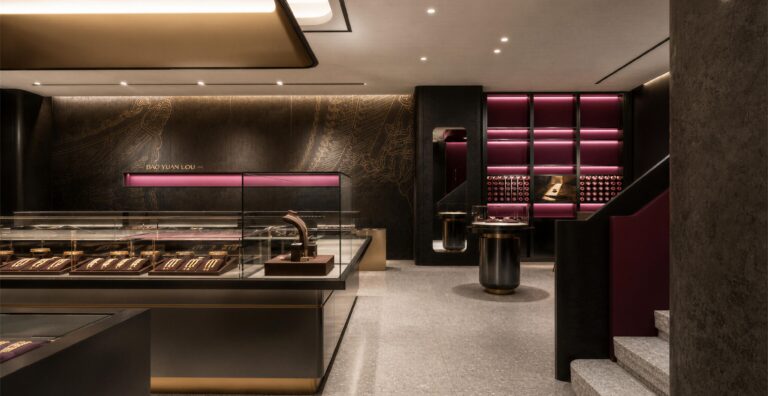
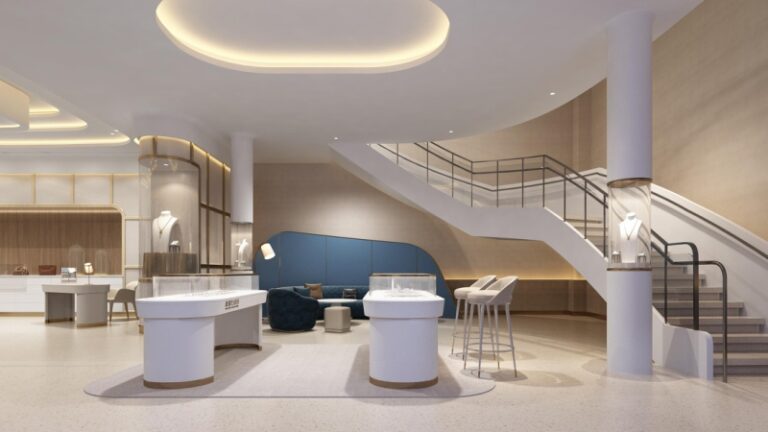
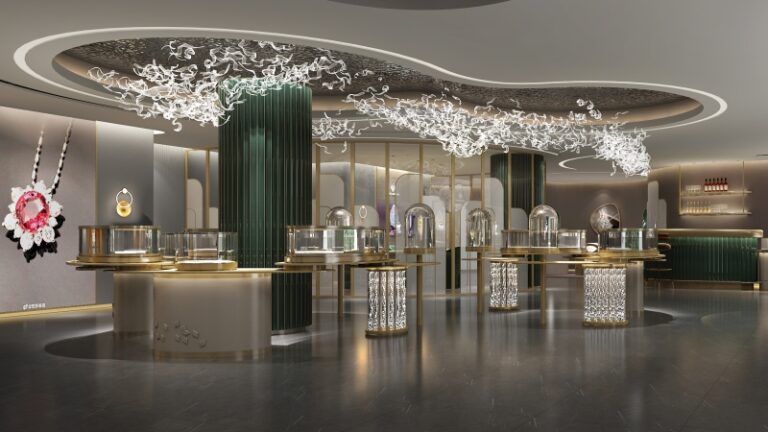
When you walk into a high-end jewelry boutique, the first thing that catches your eye is rarely the jewelry itself—it’s the custom jewelry display cabinet that holds it. A well-designed display doesn’t just store products; it sets the mood, builds trust, and directly influences whether a customer lingers, leans in, and eventually buys. That’s why more retailers are turning to a custom jewelry display cabinet rather than settling for off-the-shelf units.
But ordering custom is a significant investment, and once it’s manufactured, there’s no easy return. So before you place that order, here’s everything you should think through.
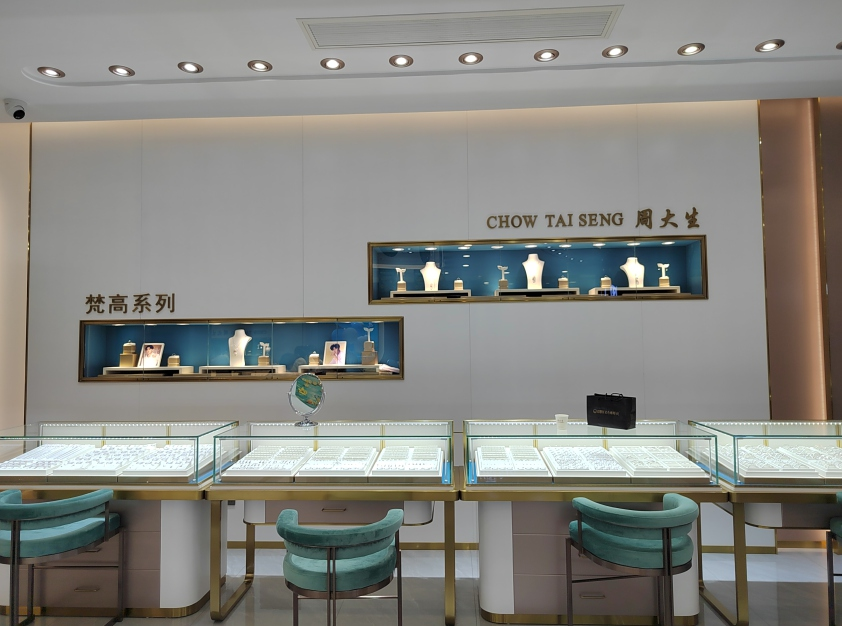
Why Choose custom jewelry display cabinet?
A standard jewelry store display case is built to generic dimensions and a one-size-fits-all aesthetic. It may fit your floor, but it won’t work with your floor—and it certainly won’t reflect your brand.
Going custom gives you three concrete advantages:
- Brand identity. Your packaging, your store’s color scheme, and your logo all tell a story. A custom jewelry display cabinet lets that story continue right down to the display fixtures, so customers feel a consistent sense of who you are.
- Space efficiency. Every store layout is different. Custom dimensions mean you can utilize awkward corners, low ceilings, or narrow aisles that a standard unit would waste.
- Product-specific presentation. A diamond solitaire needs different lighting and padding than a chunky silver bracelet or a luxury watch. Custom design lets you optimize each case for what you actually sell.
In short, a custom jewelry display cabinet built for your store is a marketing asset, not just furniture.
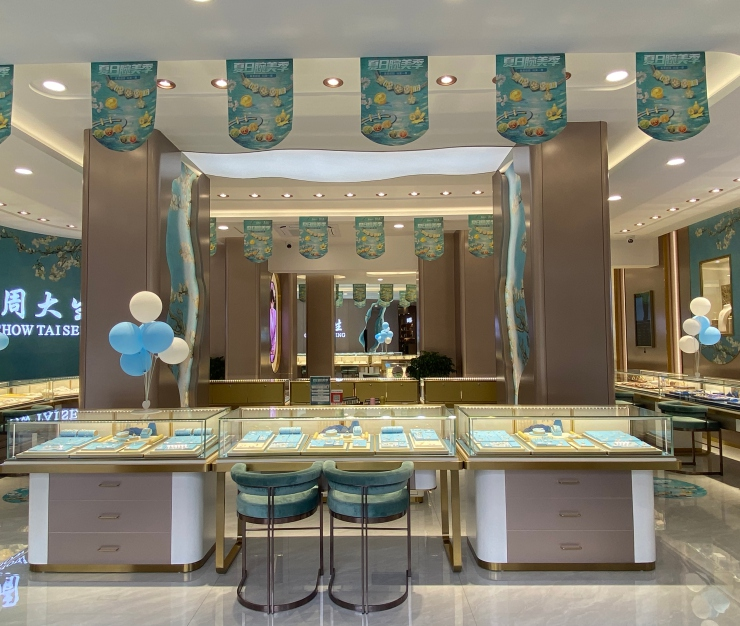
What Can Be Customized?
When you go custom, nearly every element is on the table. Here are the key variables:
Size
Height, width, and depth are all adjustable. Consider both your merchandise and your staff: a case that’s too high hides pieces from short customers; one that’s too shallow forces staff to reach awkwardly during transactions.
Shape
Straight-run cases, L-shaped corner units, oval island displays, and wall-mounted vitrines each serve a different purpose in your store flow. Island custom jewelry display cabinets anchor the center of the floor; wall cases maximize perimeter space.
Materials
Glass, wood, metal, acrylic, leatherette, and stone all create different impressions. Tempered safety glass is non-negotiable for security, while the outer finish defines luxury versus modern versus boutique warmth.
Colors
The exterior finish should complement your store interior—think warm walnut for a heritage brand, matte black and brushed brass for contemporary design, or white lacquer for a minimalist jewelry line.
Lighting
This is arguably the most important detail. LED strips, spotlights, fiber-optic accents, and UV-filtering bulbs all affect how metals and gemstones appear. Poor lighting can make even a beautiful diamond look dull.
Logo
Branding placement—whether engraved metal, backlit acrylic, or printed film—reinforces recognition every time a customer leans in.
Interior layout
Trays, hooks, ring slots, bracelet rolls, necklace busts, and adjustable shelves let you curate exactly how each category of jewelry is presented.
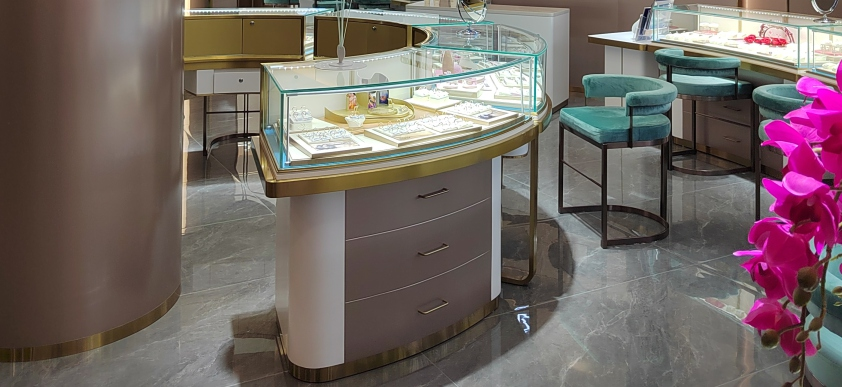
How to Design a custom jewelry display cabinet
A successful design process starts long before you talk to a manufacturer. Follow these steps:
- Measure your space. Get accurate floor plans, ceiling heights, and doorways (the case has to fit through the door on delivery day).
- Categorize your inventory. Group pieces by type and value. High-value items belong in locked, low, easy-to-monitor cases; everyday pieces can go in open-access islands.
- Map customer flow. Where do customers enter? What do they see first? Your hero pieces should sit at the “golden zone”—eye level, just inside the entrance.
- Decide on a lighting strategy. Warm white (around 3000K) flatters gold; cooler temperatures (4000K+) make diamonds and white metals sparkle. Learn more about color temperature and retail lighting. Plan the wiring before the case is built.
- Draft or commission a layout. Many manufacturers offer 3D renderings. Use them—you’ll catch problems with proportions and sightlines that a flat drawing won’t reveal.
Security Features for custom jewelry display cabinet
Jewelry is small, high-value, and easy to slip into a pocket. Security should be baked into the design, not added afterward.
- Tempered or laminated safety glass is essential—standard glass shatters into dangerous, grab-able pieces.
- High-quality locks, ideally keyless digital or cam locks with restricted keys, on every access door and drawer.
- Hidden hinges and reinforced frames make prying significantly harder.
- Alarm contacts built into the case doors, so an unauthorized opening triggers your store system.
- Sturdy bases that can be anchored to the floor, preventing an entire case from being carried out.
- Anti-peep film on glass if you want to prevent outside viewing of high-value displays after hours.
A beautiful jewelry store display case that a determined thief can open in seconds is a liability. Build security in from the first design draft.
Choosing Materials for custom jewelry display cabinet
Material decisions affect cost, durability, appearance, and even store atmosphere:
- Glass: Low-iron (extra-clear) glass eliminates the green tint found in standard glass, so your jewelry looks true to color. Tempered glass is four to five times stronger than ordinary glass.
- Wood: MDF with laminate is cost-effective and consistent; solid walnut, oak, or mahogany adds premium warmth and grain character.
- Metal: Stainless steel, aluminum, and brass finishes add modern or luxurious accents. Brushed finishes hide fingerprints better than polished.
- Interior liners: Velvet, suede, and leatherette in coordinated colors protect pieces and provide visual contrast that makes jewelry pop.
- Acrylic: Useful for risers and tiered inserts where you want the display to recede visually.
Balance aesthetics against maintenance: glossy surfaces look stunning but show every fingerprint; matte finishes are forgiving but read as less luxurious.
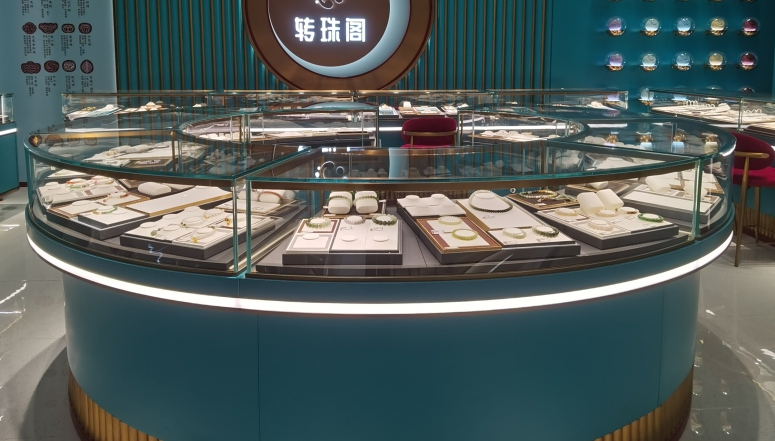
How Long Does It Take to Manufacture custom jewelry display cabinet?
Expect a realistic timeline, and build it into your opening or renovation schedule:
- Design and approval: 1–2 weeks (including 3D renderings and revisions).
- Production: 3–6 weeks for standard custom orders, depending on complexity and materials.
- Shipping: 1–4 weeks domestically; 4–8 weeks for international sea freight.
- Installation: 1–3 days on site.
In total, budget 8–14 weeks from first call to fully installed display. Rushing this process often means cut corners in materials or overlooked details. If you have a hard opening date, work backward and place your order early.
How to Choose a custom jewelry display cabinet Manufacturer
Your manufacturer determines whether your design vision becomes reality—or becomes a problem. Evaluate potential partners on:
- Portfolio and experience. Ask for photos of completed jewelry-specific projects, not generic retail fixtures. Jewelry display is a specialized trade.
- Material transparency. They should specify glass type, wood grade, lock brand, and LED specifications in writing—not vague promises of “high quality.”
- Communication and design support. A good manufacturer asks about your store layout, inventory, and brand before quoting. If they send a price after one email, be wary.
- Certifications and compliance. Look for ISO certifications, fire-retardant material ratings, and export experience if you’re importing.
- Reviews and references. Speak directly with past clients if possible.
- Warranty and after-sales. Display cases take abuse from daily opening and closing. A solid warranty on lighting, locks, and moving parts matters.
Request quotes from at least three suppliers, but don’t choose on price alone—the cheapest custom jewelry display cabinet often reveals its true cost after delivery.
Conclusion
A custom jewelry display cabinet is one of the most impactful investments you can make in your retail space. It protects your inventory, showcases your products at their best, and reinforces the brand that customers trust. But it’s also a decision you’ll live with for years—so take the time to plan your space, choose materials deliberately, build security in from the start, and partner with a manufacturer who understands the jewelry trade.
Order well, and your display cases won’t just hold your jewelry. They’ll sell it.